
Appling County Busted Mugshots Explained
Booking follows an arrest in Appling County. Once the jail accepts a person, staff log the arrest details and custody dates. Register fields get filled in. A booking photo is taken if one is made and lawfully released.
Where a record lands depends on the arresting agency. The Appling County Sheriff's Office runs the public custody route, and the Appling County Jail keeps the county booking record. A Baxley Police Department report may stay with the city even though the jail entry sits with the sheriff. Graham splits further. Some municipal cases land in Jeff Davis County Jail, while felonies and most non-traffic misdemeanors handled in Appling State or Superior Court go to Appling County Jail. Surrency has no verified official municipal web channel. The arresting agency named on the citation or report is the key detail.
This division explains why a name can appear in one source and vanish from another. A current roster reflects custody only. An open-records response covers whatever a custodian holds. A court docket tracks the case itself. Treat none of them as a complete answer alone.
A mugshot is taken at the jail when a person is booked. What happened afterward lives in the court file, not the photo.
Appling County Booking Record Fields
Georgia's jail-register law sets the baseline. O.C.G.A. § 42-4-7 requires the person's name, age, sex, race, charged offense, date of commitment, and date of discharge. The current Appling PDF is a dated snapshot, though. It does not prove every optional field appears on every release. Confirm a booking number, bond, court date, or photograph with the official record or custodian before counting on it.
These fields show what a careful request should target. They also show why a record stays useful after someone leaves custody. The discharge date marks a jail event only. It says nothing about whether the case was dismissed, pled, tried, or still pending.
| Field | What it can show |
|---|---|
| Name | The jail-register identifier. Compare other details before assuming two people are the same. |
| Age, sex, race | Statutory register descriptors. They are not proof of identity on their own. |
| Charged offense | The charge recorded at intake, which may differ from the filed charge or final judgment. |
| Commitment or booking date | When the person entered jail custody. Arrest time and formal booking time can differ. |
| Discharge or release date | A custody event. Release can follow bond, transfer, sentence completion, or another basis. |
| Booking number or inmate ID | A useful request and identity key if Appling assigned one. It was not verified in the current PDF. |
| Arresting agency | Points to ACSO, Baxley Police, Graham Police, another agency, or a state or federal custodian. |
| Charges as booked | Intake charges that can change during prosecutor review or court proceedings. |
| Bond | A release condition, not a case result. No Appling-specific public bond schedule was verified. |
| Court or court date | A possible route to State, Superior, Magistrate, Municipal, or Juvenile records. Confirm with the clerk. |
| Facility | Where the person is held. It is especially important for Graham’s two-jail routing. |
| Booking photograph | An identification image, not evidence of guilt. Appling’s current PDF photo treatment was not verified. |
Note: A jail register and a police incident report can use different dates, descriptions, and record numbers for the same event.
Request an Appling County Booking Record
Some situations call for the formal route. The person has been released, the weekday roster has not refreshed, the photo is not visible, or an older booking is needed. The sheriff's Open Records Request form is the official fallback in those cases. Ask for the booking record and the booking or intake photograph as separate items. Give the full recorded name, the approximate booking date, the arresting agency, and any incident or case number, plus a reason the custodian can use to locate the file. The form also accepts requests for reports and photographs.
Georgia's Open Records Act sets a clock. An agency gets no more than three business days for production when records are available. If production slips past that window, the response should describe the records, set a schedule, and estimate likely costs. The first fifteen minutes of search, retrieval, review, or redaction time come free. Paper copies are generally capped at $0.25 per page under the general statute. The sheriff publishes no fixed booking-photo price. Ask for electronic delivery when you can.
- Write down the person’s name, booking or arrest date, arresting agency, and any case or booking number.
- Use the sheriff form and request the existing booking record and existing intake photograph separately.
- For a photograph request, provide the written affirmation required by O.C.G.A. § 35-1-19 and use a compliant, purpose-neutral description.
- Read the response for the production date, cost, or exact exemption if part of the request is withheld.
The sheriff's office sits at 560 Barnes Street, Baxley, GA 31513. Office and jail phone: 912-367-8120. Hours posted by the sheriff run Monday through Friday, 8:00 a.m. to 5:00 p.m. Jail supervisor Adam Bell is listed at 912-705-5224 and abell@applingcoso.com. These contacts point to the record custodian route; they do not promise that a specific image exists or can be released.
Appling County Sheriff’s Office
560 Barnes Street
Baxley, GA 31513
Office and jail: 912-367-8120
Jail supervisor: Adam Bell, 912-705-5224
Monday-Friday, 8:00 a.m.-5:00 p.m.
The official request route matters because the online roster can be replaced at any time. The sheriff's request page offers a direct fallback for a targeted record or photograph, while the public file can change without leaving any visible history behind.
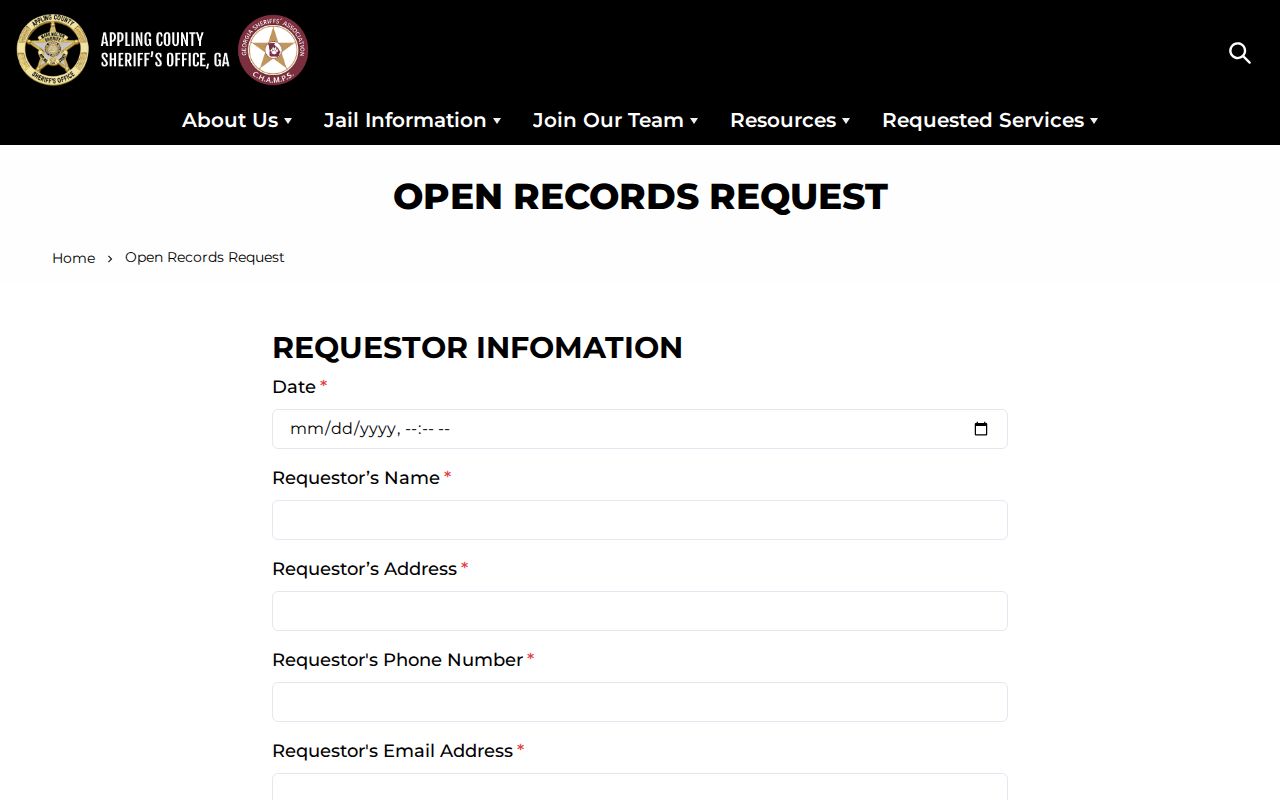
The screenshot shows the official request route, not a gallery of faces. A focused request keeps the search tied to the agency that holds the record. That makes the response easier to verify.
Retention and public display are separate matters. Georgia Archives retention schedules list LG-19-060 jail booking records at ten years after release, LG-19-061 jail registers at ten years after the last entry, and LG-19-050 daily incarceration lists at one year. Those schedules do not promise a photograph stays online for the same span. Ask ACSO about the record series before assuming an older item was destroyed.
Georgia Mugshot Law and Removal
Georgia's Open Records Act, found at O.C.G.A. §§ 50-18-70 and following, makes agency photographs and electronic data public unless an exemption applies. Several things can narrow what an agency releases. Active investigations, juvenile matters, privacy interests, and security concerns all count. When a record is withheld, the agency must name the specific exemption it relies on. Keep one distinction in mind. A photo that is not posted online may still be a public record, and "restricted" or "erased" mean very different things.
Booking photos also get their own statute. Replace that thought with the real one: O.C.G.A. § 35-1-19 limits when an arresting agency can post booking photographs on its website, subject to listed exceptions. It also bars supplying an image when the agency knows it may be posted for a fee or other consideration. A requester can even be asked to sign a written affirmation that the intended use complies with the law. This is why a targeted request works better than expecting some official image gallery.
Georgia has a separate free-removal rule for commercial sites: O.C.G.A. § 10-1-393.5(b.1). When the outcome qualifies, the person in the photo can send a documented written demand, and the publisher then has thirty days to take it down. The demand must carry the person's name, date of birth, arrest date, and arresting agency, delivered the way the statute spells out. News and commentary are exempt. Fix or document the official source first, then use whichever statutory route fits.
Record restriction under O.C.G.A. § 35-3-37 is not the same as destruction. Arrests before July 1, 2013 go through a three-section GBI request routed to the arresting agency and prosecutor. For later arrests, a qualifying nonconviction outcome usually means contacting the right prosecutor instead of filing a GBI application. A court can seal clerk records after restriction, once the legal standard is met. The Appling Clerk can walk you through the court file. The GBI restriction hub is where the state form and instructions live.
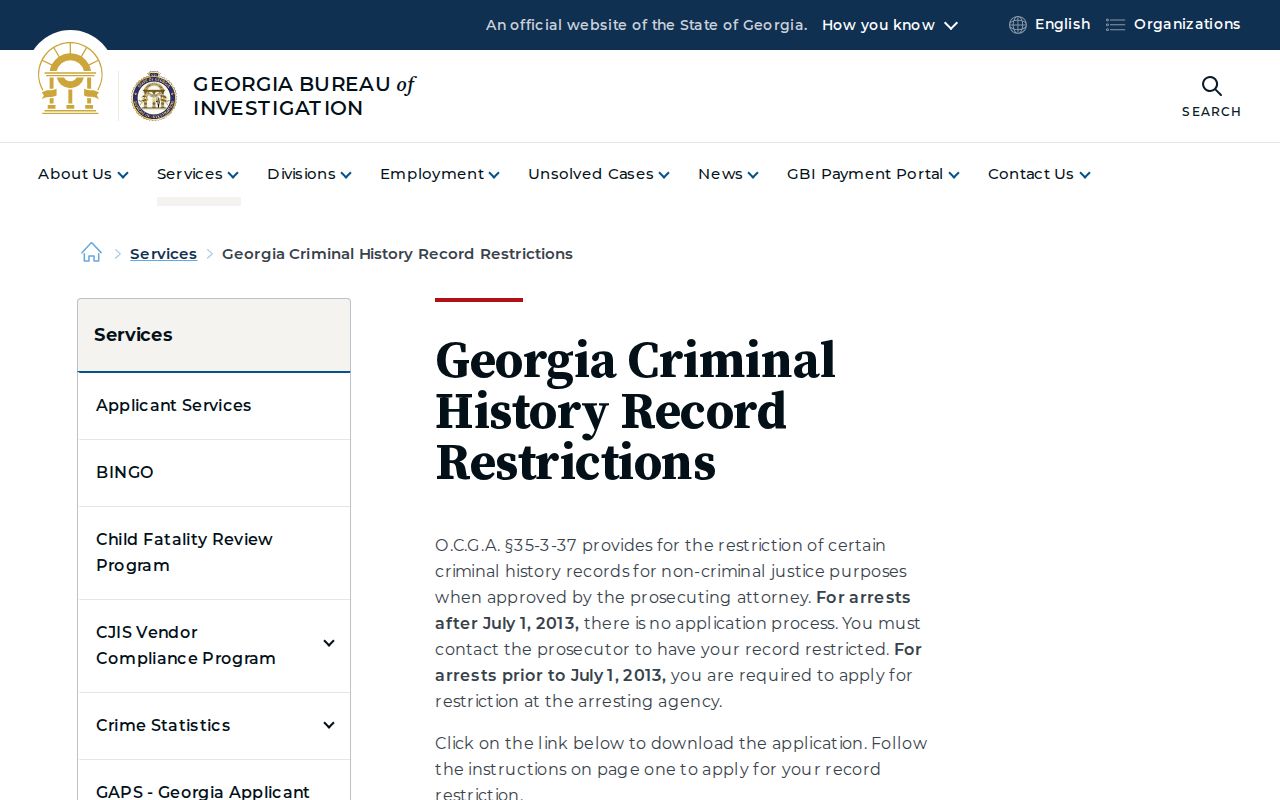
That restriction image comes from a state process. It does not wipe every copy from each agency, publisher, court file, or search cache. The Georgia Attorney General's mugshot-website explanation lays out the free statutory path. A covered publisher demanding payment is not the only route. Save the source URL and any outcome documents. Run the official correction or restriction process. Where the law fits, ask the Attorney General about a consumer complaint. A search-engine outdated-content request can refresh a stale result once the live source changes. It cannot touch a page that is still up.
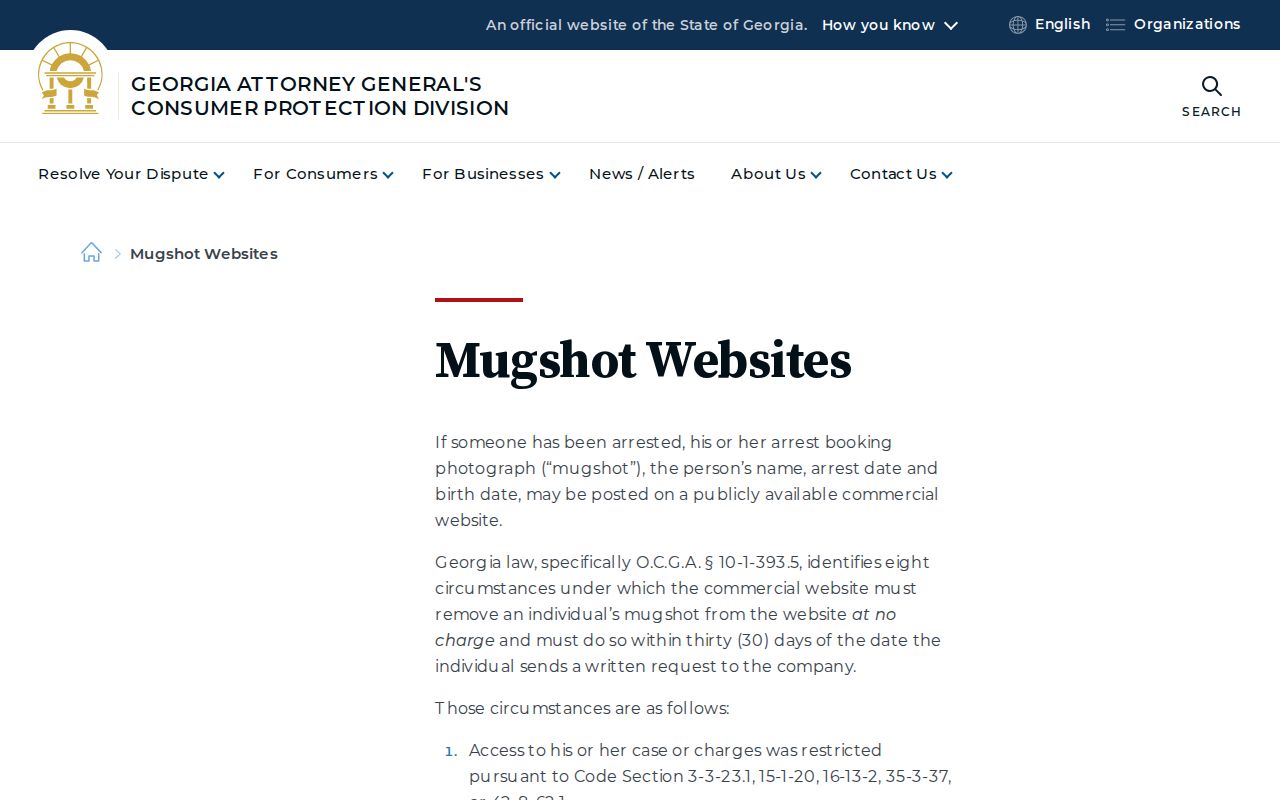
The consumer page explains the law. It does not promise every arrest record qualifies for removal. Outcome, arrest date, publisher type, and the statutory facts each have to be checked one by one.
Juvenile records sit behind a separate boundary. The Appling Clerk treats Superior and State records as open for inspection and copying. Juvenile records are access-limited instead. No juvenile booking photo belongs in an adult custody lookup.
Find Appling County Busted Mugshots
Start any search by knowing the custody status. The official roster is a snapshot of the local jail right now. Someone released may not appear there anymore, even though the booking record still exists. A state-sentenced prisoner shows up in GDC's system instead. Federal and immigration detainees sit in federal locators. For what happened after an arrest, the court path has the answer.
- For a just-booked person, open the Appling Inmate Roster, select the latest PDF, and note its displayed date.
- If the matter is time-sensitive or falls on a weekend, call the jail at 912-367-8120 because the posted file is labeled updated daily Monday through Friday.
- For a released person or missing file, submit the sheriff’s open-records request with a narrow date range and identifying details.
- For a Graham Municipal Court case, check Graham’s procedure and Jeff Davis County Jail. For felonies and most non-traffic misdemeanors in Appling State or Superior Court, check Appling County Jail.
- For a sentenced or transferred state prisoner, use GDC Find an Offender. For federal or immigration custody, use BOP or ICE, knowing those public locators do not provide mugshots.
- For the case result, use Georgia Courts’ Appling State or Appling Superior link, then confirm the final docket or order with the Appling Clerk.
The sheriff's current wanted page is not a booking search. A wanted-list entry is its own kind of notice from law enforcement. Warrant questions belong with the sheriff or the court. Never approach anyone you find listed there.
Note: A missing roster name can mean release, transfer, a delayed weekday replacement, a different booking location, a name variation, or no booking.
Where Appling County Busted Mugshots Appear
Go to official channels first. Third-party pages can help you locate an older report, but they are not custody systems. They can be incomplete, stale, duplicated, or flat wrong. Georgia law also limits what agencies may post on their own websites, so do not count on a photo appearing on the roster.
| Channel | Photo status | Authority | Access |
|---|---|---|---|
| ACSO Inmate Roster | Not confirmed in the current PDF | Official current custody snapshot | Replaceable PDF, updated daily Monday-Friday |
| ACSO Open Records | Existing photo can be requested | Official custodian | Targeted form for booking records and photographs |
| Appling Sheriff app | No richer photo feed verified | Official navigation and notices | App-share route with roster, BOLO, tips, requests, and alerts |
| Georgia Courts | Not a mugshot source | Official case and disposition path | Appling State and Superior links through PeachCourt |
| GDC Find an Offender | Photo if available | Official state-corrections source | Sentenced or transferred state custody |
| BOP or ICE locator | No public photo field | Official federal or immigration locator | Federal or immigration custody only |
| News-Banner | Varies by story | Local journalism, not custody | Area News and recurring multi-day arrest reports |
| Georgia Gazette Appling | Unofficial publication | Secondary discovery source | Rolling county posts, possibly stale or archived |
| Mugshots.com Appling archive | Historical third-party material | Unofficial and stale | Visible years stop at 2016, not current bookings |
Two third-party names come up often. One is the Georgia Gazette Appling section. The other is the Mugshots.com Appling page. Knowing them helps separate the local landscape from official custody. Neither one stands in for ACSO, the Appling Clerk, GDC, BOP, or ICE.
The News-Banner is the best recurring local source when the sheriff posts no same-day or weekly blotter. Its stories may carry agency-attributed names or a photo. Still, they are journalism, not records. A report can stay online long after release. A news item does not change when a case does.
Busted and Booked in Appling County
Appling County's official Inmate Roster route works like a file gallery, not a name-search database. You do not type in a first and last name. You open a posted document instead. The visible PDF was dated August 14, 2026. Its title read "Updated Daily Monday-Friday." That points to a weekday posting rhythm. Expect a lag over the weekend, since that schedule leaves Saturday and Sunday without fresh files.
Treat the PDF as a snapshot of who is in local custody right now. It is not a running archive of recent arrests. There is no verified city filter. Check the current document's columns and photo treatment before you rely on any optional field. For a full statutory register, the official baseline remains the safer bet.
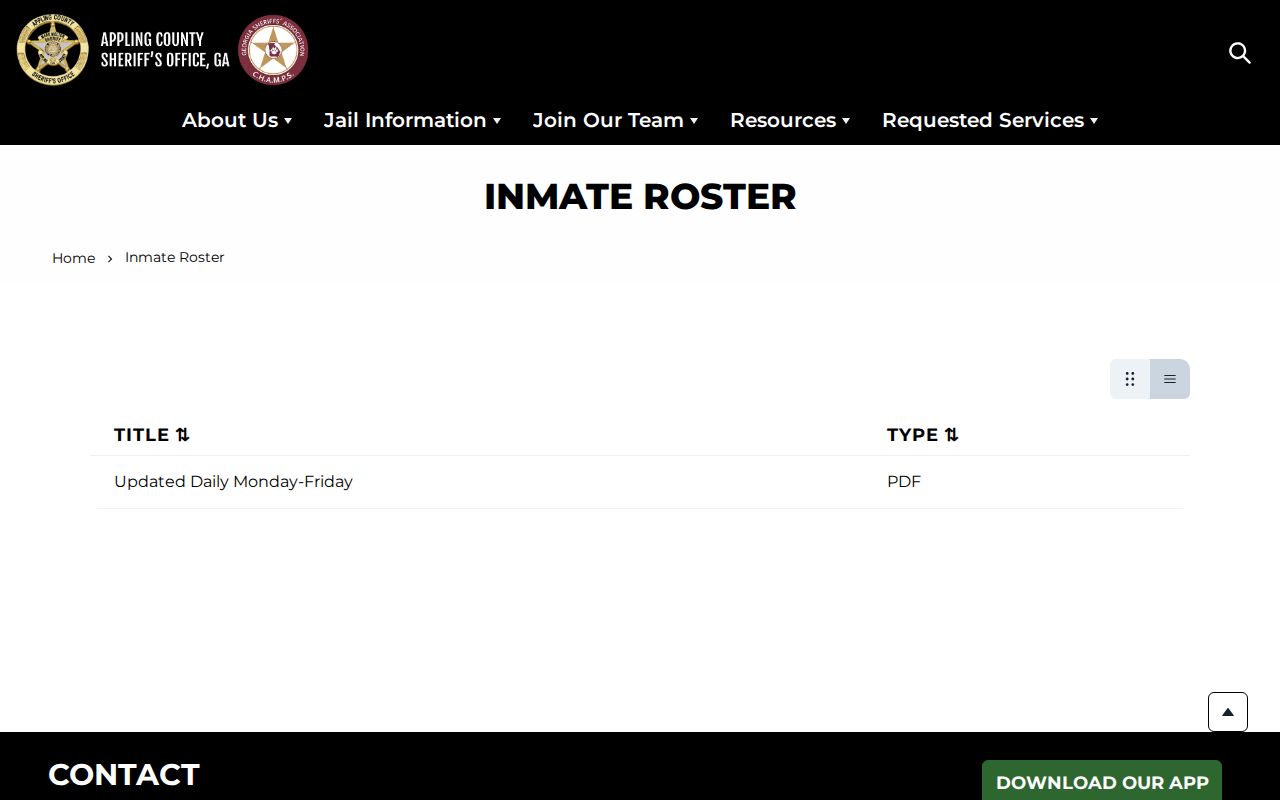
The official route is an access point, not a saved gallery of faces. Treat the source link as the live file. Dated PDFs get swapped out without notice, so a copy you keep can go stale fast.
| Search field | What Appling’s public route supports |
|---|---|
| First name | No public first-name input. Use the PDF viewer’s text find if the file is indexed. |
| Last name | No public last-name input. Inspect the latest dated PDF manually when text search fails. |
| Booking date or agency | No public date or agency filter was found. Use the date and agency when calling or requesting a record. |
| Latest file date | The official title says updated daily Monday-Friday. Check the displayed date before relying on the snapshot. |
| Photo field | Not confirmed in the current PDF. Do not promise a booking photograph from the roster. |
Start by opening the route. Pick the newest dated PDF, then search inside it or scroll the pages by hand. When you spot a name, match it against a second identifier to be sure you have the right person. No match? For urgent questions, call the jail directly. For older bookings, file an open-records request instead of hunting through PDFs. The sheriff's app puts the roster and request links within easier reach, though nothing suggests it shows extra inmate details or photos.
Busted Last Night in Appling County
Appling has no verified same-day bookings page. There is no 48-hour list or 72-hour list. No weekly sheriff blotter exists, and there is no public roster archive. The weekday PDF is the one official custody route. That is all it is. It does not show everyone arrested last night. The gap matters. A quick release, a transfer, or a weekend arrest can all slip past it.
| Time window | Official Appling result | Best documented fallback |
|---|---|---|
| Same day or 24 hours | No distinct ACSO new-bookings view found | Latest PDF plus jail call |
| 48 hours | No official 48-hour page found | Jail confirmation or targeted request |
| 72 hours | No official 72-hour page found | Open-records request; News-Banner only for context |
| Weekly or multi-day | No sheriff arrest blotter found | News-Banner Area News, unofficial and not exhaustive |
| Archive | No online official booking archive found | ACSO custodian, court file, or retention route |
Newspapers help fill the gap. The News-Banner runs recurring arrest reports that cover several days at a stretch, and the Gazette's rolling county posts can point you to a story. Neither one tells you who is in custody right now. Someone in a news item may have bonded out before the next roster file posted, and someone on the roster may have been booked before the paper's reporting window opened.
Georgia's first-appearance rules layer on more timing. Without bond, a warrantless arrest generally carries a 48-hour outer limit for the initial appearance; an arrest on a warrant gets 72 hours. Those are court deadlines. They say nothing about when a PDF refreshes.
Note: A weekly arrest report can describe released people, while a current roster can include people booked earlier; use each source for its actual custody state.
Georgia DOC Offender Photos
The Georgia Department of Corrections Find an Offender search covers a later custody stage. It tracks people sentenced or moved into state corrections. It does not cover someone arrested in Appling last night. Search by name, physical description, GDC ID, or case number. An exact name can fail you. The FAQ then advises typing the first four letters of the last name and selecting all offenders.
GDC notes that a photo shows only if one is on file. A blank profile does not rule out a county booking. Completed First Offender Act records stay unpublished. A GDC case description may not match the original jail charge after amendments, pleas, dismissals, or trial results. Anchor identity on the GDC number and the court record, never on a picture alone.
Need a written state-corrections record or image? Use the GDC Open Records Request. GDC promises an initial response within three business days. It charges $0.10 per nonmedical page. Eligible search or redaction time is billed at the lowest-paid qualified employee's hourly rate. Central, security, intelligence, and medical files can be exempt. And county jail records never turn into GDC records just because both involve custody.
Appling County: Booked or Released
One "mugshot search" usually hides four different questions. The current jail entry asks whether someone appears in the latest local custody snapshot. A booking record asks what the agency logged at intake. A court docket asks how the case came out. State and federal locators ask about a separate custody system entirely.
| Custody or record state | Where to look | What it can answer |
|---|---|---|
| Just booked or still in Appling County Jail | ACSO dated weekday PDF; jail phone for urgent confirmation | Possible current local custody and statutory register fields |
| Released from the county jail | ACSO open-records request | Existing booking record and, if releasable, existing intake photo |
| Graham municipal matter | Graham PD and Jeff Davis County Jail | City report and the separate municipal custody route |
| Sentenced or transferred to GDC | GDC Find an Offender | State-corrections profile and photo if available |
| Federal or immigration custody | BOP or ICE locator | Public locator status; neither supplies a public mugshot field |
| Case outcome | Appling Clerk and Georgia Courts e-access | Dismissal, plea, acquittal, conviction, sentence, or another disposition |
The BOP Inmate Locator holds federal records from 1982 forward. It shows no photos. The ICE Online Detainee Locator has no photo field either, and it covers immigration custody under its own search rules. Read a "released" or "not in BOP custody" result with care. It can point to another system. It can also point to supervision rather than a walk out the door.
After an Appling County Booking
Booking is the start of a court path, not the end of one. Georgia’s initial-appearance rules require the judicial process to begin as soon as possible and set outer limits when bond has not already been made. A judicial officer explains the charge and rights, addresses counsel and probable cause where applicable, and considers bail unless only a Superior Court judge can set it. Arraignment is the later stage where a defendant is informed of the accusation and enters a plea. Bond is the condition for release while the case continues.
The Appling Clerk receives and stores Superior and State Court records. Superior Court handles felony trials and has broad jurisdiction. State Court handles misdemeanors, including traffic matters, and certain warrant and preliminary functions. Magistrate Court handles warrants, preliminary hearings, some bail matters, and minor cases. Municipal Court handles local ordinances, traffic, and authorized preliminary or misdemeanor matters. Juvenile Court records have tighter access limits.
The Georgia Courts e-access gateway lists Appling State and Appling Superior and routes users to PeachCourt, which requires an account. Search by party and case number when available, then read the accusation or indictment, docket entries, and final order. If online access is incomplete, contact the Appling Clerk at 69 Tippins Street, Suite 103, Baxley, GA 31513, 912-367-8126.
The court gateway is the next source after an arrest record. It can show that the filed case changed or ended even when a news item or old booking reference did not change.
- Booking
- Administrative intake into jail custody after arrest.
- Arraignment
- A court proceeding where the charge is presented and a plea is entered.
- Disposition
- The court’s recorded outcome, such as dismissal, plea, acquittal, or conviction.
- Expungement or restriction
- Legal processes that limit access or dissemination in qualifying cases. They do not automatically erase every copy or search result.
- Detainer
- A request from another authority that can affect release or transfer. Confirm its status with the responsible custodian.
The story after intake lives in the court record, and the docket is where to follow it.
Busted Mugshots by Appling County City
Each city page carries detail that a county-wide roster cannot hold. Baxley has a working police records path. It has no feed that tracks individual arrests. Graham splits its bookings between the Jeff Davis County Jail and the Appling County Jail, and that split is spelled out. Surrency is different. With no current official police web presence to lean on, the arresting agency field is the best place to start.
- Baxley Busted Mugshots: use the Baxley Police records route for the city report and ACSO for county-held booking material.
- Graham Busted Mugshots: check the case type before choosing Jeff Davis County Jail or Appling County Jail.
- Surrency Busted Mugshots: start with the agency named on the citation or report and call ACSO for county custody questions.
All three city pages route you back to the official Appling systems. None dresses up a city keyword as its own gallery. A local paper might cover a story tied to one of these towns. That coverage still does not turn a third-party post into an official custody record.